

The wearables industry has spent the last decade trying to turn your body into a dashboard. Steps, sleep scores, HRV - the quantified self promised clarity and quietly delivered another source of anxiety. Another number to optimize. Another thing to feel bad about on a Tuesday.
But the thing most people lose track of every day isn’t their heart rate. It’s the idea that came mid-conversation. The thing they said they’d follow up on. The thought that arrived somewhere between the shower and the front door and was gone by the time they got to work.
That’s the shift. From the quantified self to the qualitative self. And it’s a much bigger market than anyone thinks.
What this week confirmed
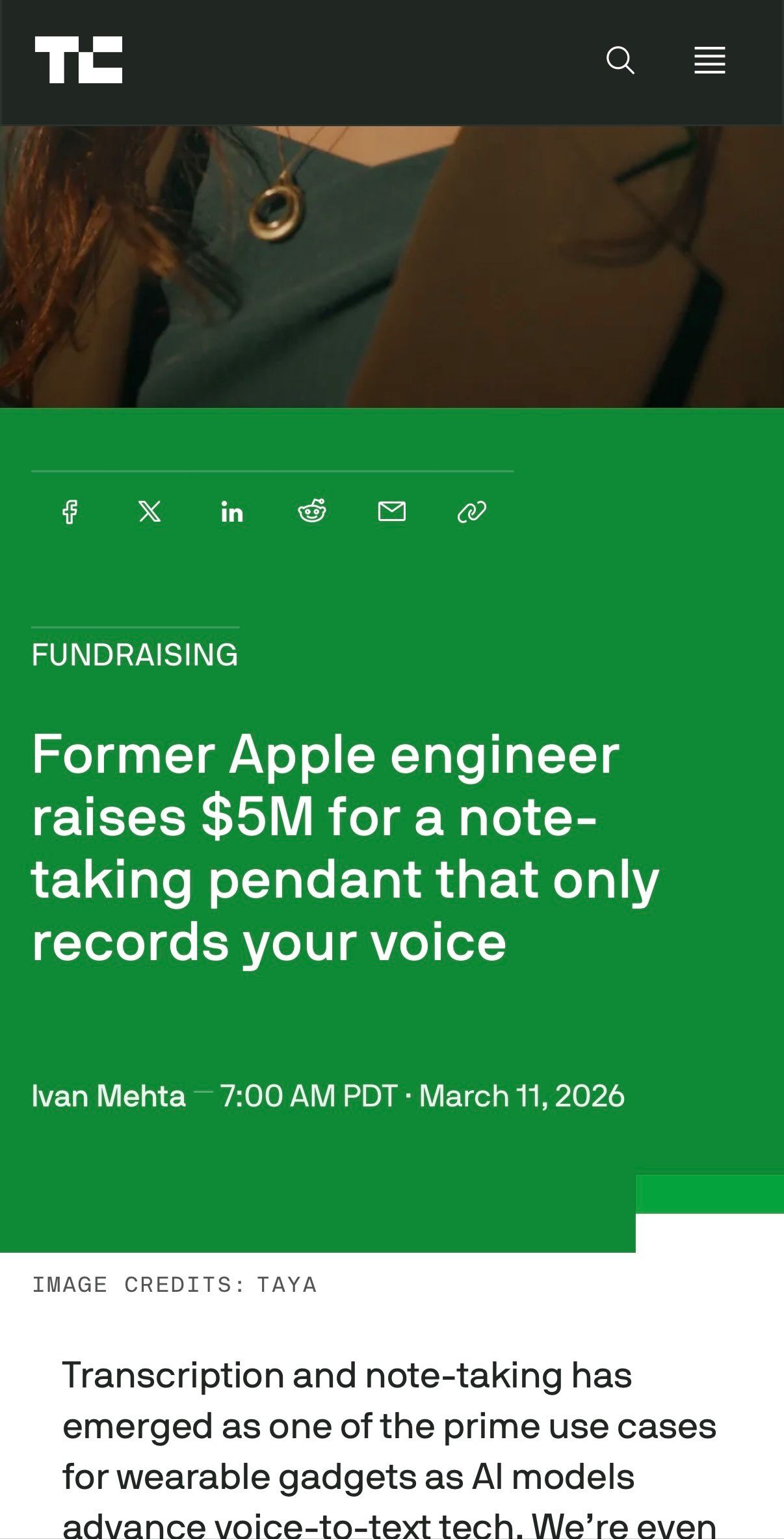
We announced our $5M seed round this week, led by a16z Speedrun, MaC Venture Capital, and Female Founders Fund.
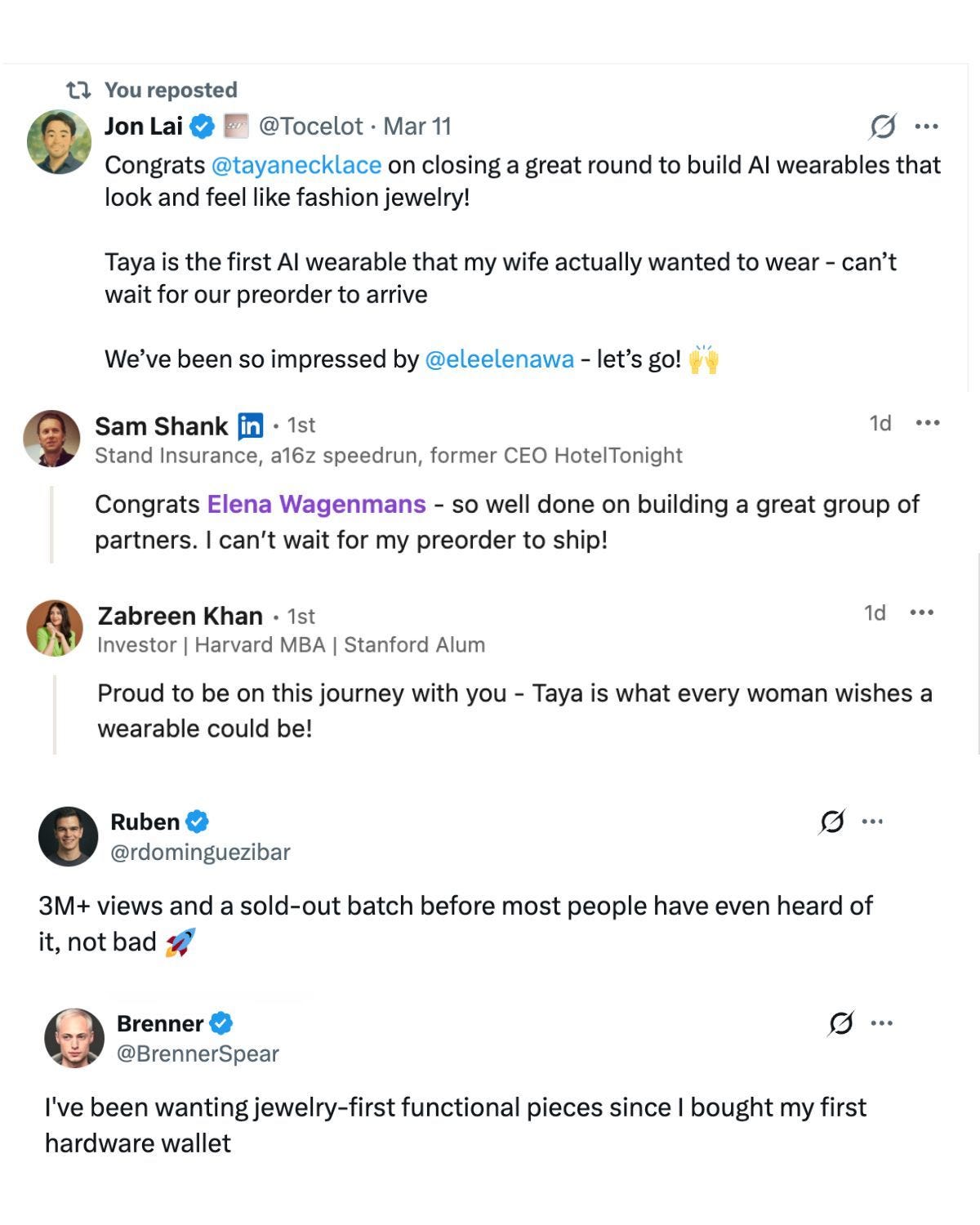
But the thing that stayed with me wasn’t the coverage. It was the word that kept showing up in the comments, the DMs, the messages from strangers who found us through a retweet.
Finally.
Not “cool product.” Not “interesting concept.” Finally. Like people had been waiting for someone to build this and had quietly given up hope.
Read more here.
Why jewelry and why now
Most wearables are built from the inside out. Start with the technology, then try to make the hardware acceptable. The result is a generation of products that look like gadgets - things you tolerate wearing, not things you choose to wear.
We started from a different question: if the technology stopped working, would you still want to wear it?
For Taya, we won’t ship until that answer is yes. That question - what we call the dead battery test - sits behind every design decision we’ve made. The materials. The weight. The way it sits on your neck. Jewelry first. Intelligence second. Not because the intelligence doesn’t matter, but because if you don’t want to wear it, none of the intelligence matters at all.
The reaction that stuck with me most this week: “The first AI wearable my wife actually wanted to wear.” That’s the bar.
What we’re actually building
Taya captures your voice - only when you activate it, only you, using directional microphones that focus on the wearer rather than the room. No ambient recording. No camera. You decide what goes in.
What comes out is something the wearables category hasn’t figured out how to build yet: a searchable, qualitative record of your own thinking. The idea mid-conversation, surfaced when you need it. The grocery item remembered at the right moment. The creative spark from the walk home, waiting for you on Sunday morning.
Not a transcript of your day. Not another dashboard of metrics. Just the things that mattered, held somewhere they can actually be used.
Female Founders Fund wrote about this better than I could in their investment thesis: “For a category that has long told people how to optimize their bodies, Taya is doing something more interesting: reducing cognitive load so that important details aren’t lost in the flow of daily life.”
What comes next
We’re back in the studio. Scaling the team.
The announcement is behind us. The build is very much ahead.
If this week taught me anything, it’s that the shift from the quantified self to the qualitative self isn’t a niche idea. It’s what a lot of people have been quietly waiting for.
We’re just getting started.
Elena
Join the Journey
Pre-order Now (Shipping Fall 2026)